

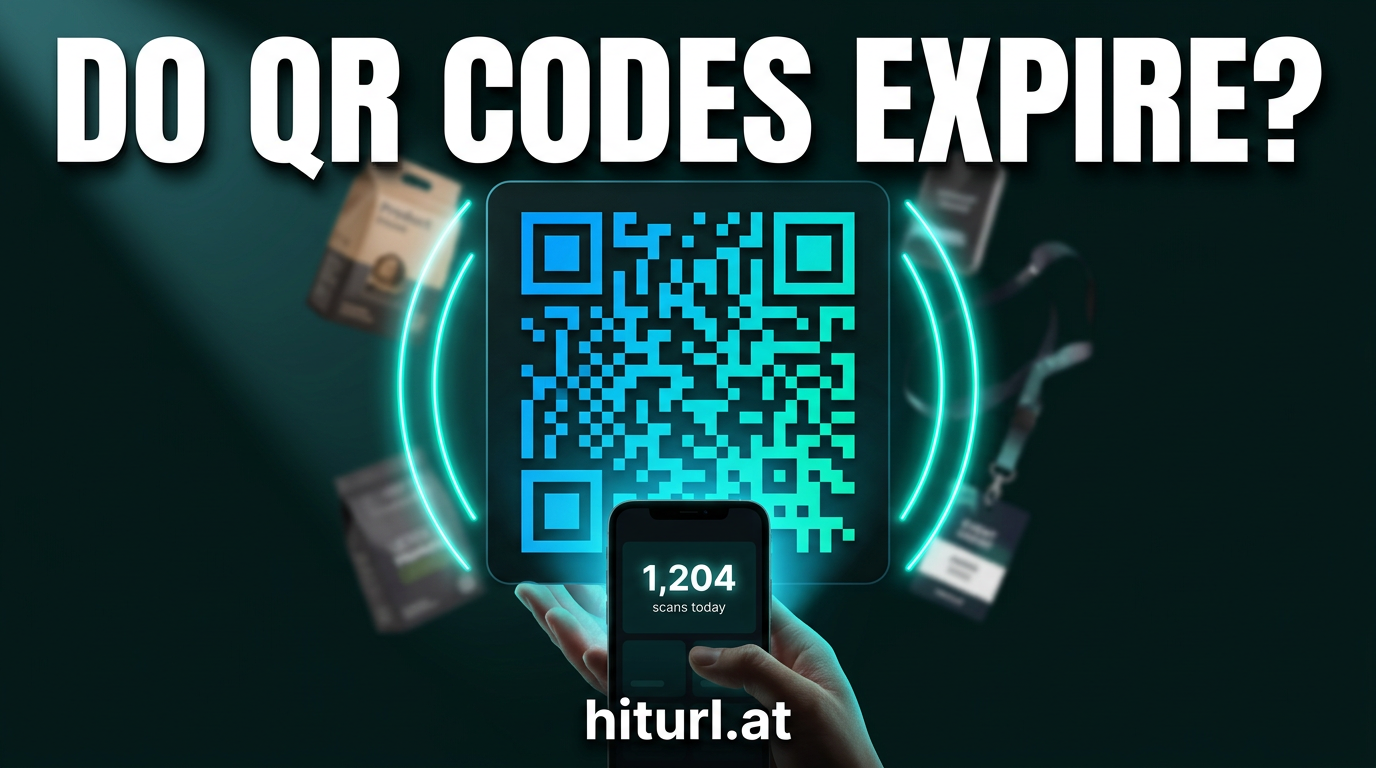
Scan a QR code on a product label and get a 404 error. Print QR codes on 10,000 flyers and then wonder if they will still work next year. These are real problems, and the answer to whether QR codes expire is not a simple yes or no. It depends entirely on the type of QR code you created and the platform behind it.
This article breaks down exactly how QR code lifespan works, what causes them to stop working, and how to make sure yours never let your audience down.
The Direct Answer: Do QR Codes Expire?
Static QR codes never expire. Dynamic QR codes can expire, but only under specific conditions tied to the platform or account managing them.
Understanding the difference between static and dynamic QR codes is the foundation of everything else in this article. Let's get into the mechanics.
Static vs. Dynamic QR Codes: How Each Type Works
A static QR code encodes a destination directly into the pattern of the code itself. The URL, phone number, or text is baked into the pixels. No server, no redirect, no account required. Once it is printed, it works forever, as long as the image is scannable and the destination URL is still live.
A dynamic QR code works differently. It encodes a short redirect URL, and that redirect URL points to your actual destination. The short link is stored on a server, and the server routes the scanner to wherever you have configured the code to go. This means you can change the destination without reprinting, but it also means the QR code depends on that server staying active.
A static QR code is permanent by design. It holds your destination inside the code itself and requires no third-party platform to function after creation. A dynamic QR code trades that permanence for flexibility, routing scans through a redirect server that must stay online.
The ISO/IEC 18004 standard, which defines the QR code specification, does not include any concept of expiry. The format itself is built to last. Expiry is a business-layer decision, not a technical one.
What Actually Makes a QR Code Stop Working?
There are four real causes of a dead QR code. None of them are built into the QR code format itself.
- The destination URL is offline. If the page your QR code points to returns a 404 error or the domain has lapsed, scanners hit a dead end. This affects both static and dynamic codes.
- The platform account was cancelled or expired. Dynamic QR codes route through a platform's short link infrastructure. If the account is deleted, downgraded past a feature limit, or the company shuts down, the redirect breaks and every code tied to that account goes dark.
- The platform imposed an expiry date. Some QR code platforms set scan limits or time-based expiry on free-tier codes. After a certain number of scans or a certain date, the code is deactivated.
- The printed code is physically unreadable. Fading, damage, or a low-resolution print can make a code unscannable. No software fix solves a physical problem.
The most common cause of a QR code failing in the field is not technical decay. It is a broken destination URL or a lapsed platform account. Both are entirely preventable with the right setup.
If you are using QR codes in print, this matters a lot. Read the full guide on using QR codes in print marketing to understand how to protect your campaigns before they go to press.
How Long Do QR Codes Last on Different Platforms?
The honest answer is: it depends on the terms of the platform you used to generate the code. Here is a realistic comparison of common scenarios.
| QR Code Type | Lifespan | Editable After Print? | Depends on Platform? |
|---|---|---|---|
| Static QR code (free generator) | Permanent (URL must stay live) | No | No |
| Dynamic QR code (free tier, scan-limited) | Until scan limit hit or account expires | Yes | Yes |
| Dynamic QR code (paid platform) | As long as account is active | Yes | Yes |
| Dynamic QR code (HitURL) | No scan limits, no expiry on the redirect | Yes | Yes, but free to maintain |
The risk with free tools that impose scan caps is real for anyone running a print campaign at scale. A restaurant menu QR code that stops working after 500 scans is worse than useless. See the full breakdown in our guide on QR codes for restaurant menus.
Does HitURL's Dynamic QR Model Protect You From Expiry?
Yes. HitURL generates dynamic QR codes where the redirect is tied to a short link you control. There are no scan limits on the free tier, and the underlying redirect infrastructure is built for reliability.
Because the QR code encodes a HitURL short link, you can update the destination at any time without touching the printed code. Change a landing page, swap out a broken URL, or redirect seasonal campaigns to new content. The physical code stays the same.
A dynamic QR code is only as reliable as the platform managing its redirect. Choosing a platform with no scan caps and no arbitrary expiry dates is the single most important decision you make before printing.
HitURL also generates branded, dynamic QR codes with your logo or colors built in. A dynamic QR code with a branded design is one where the destination URL can be changed after printing while the visual identity stays intact. Learn how to create a free dynamic branded QR code in minutes.
Start shortening links for free at hiturl.at. No credit card needed.
What Happens When the Destination URL Goes Offline?
This is the scenario most people forget to plan for. The QR code itself is fine. The redirect is working. But the page it points to returns an error.
With a static QR code, you are stuck. You cannot update the destination without reprinting. If that code is on 5,000 business cards or a banner at a trade show, the damage is done.
With a dynamic QR code, you log in to your platform and update the destination in seconds. The printed code continues working, now pointing to a live page. This is exactly why dynamic QR codes exist, and why the choice of platform matters so much before you go to print.
For business cards specifically, this reliability is not optional. The complete guide to QR codes on business cards covers how to structure your setup so a URL change never breaks your first impression.
The Future-Proof QR Code Checklist
Use this checklist before printing any QR code on physical materials. Following it eliminates the most common causes of QR code failure.
- Use a dynamic QR code for anything printed. Never lock a static destination into a physical item you cannot easily replace.
- Verify the platform has no scan limits on your tier. Confirm this in writing before committing to a tool.
- Test the scan before printing. Scan the code from a phone at arm's length. If it scans reliably, the resolution is safe to print.
- Set a calendar reminder to audit your QR codes every 6 months. Destinations change, domains lapse, pages get moved. A periodic scan audit catches dead links before your audience does.
- Keep your platform account active. If the platform requires a subscription, diarize the renewal date and treat it as critical infrastructure.
- Use a redirect you control. A short link through a platform you manage is better than a QR code pointing directly to a third-party URL you cannot update.
- Document your QR code destinations. Keep a spreadsheet of every printed QR code, where it appears, and where it points. You need this for audits and campaign handoffs.
The future-proof QR code is not about the code itself. It is about the infrastructure behind it: a dynamic redirect you control, a platform with no expiry policies, and a regular audit habit that catches broken destinations before they reach your audience.
If you are using QR codes to collect survey responses or form submissions, the destination URL is especially critical. The guide on linking QR codes to Google Forms and surveys shows you how to structure this correctly.
Choosing the Right QR Code Setup for Long-Term Reliability
The right setup follows a simple framework: The Redirect-Control Method. It has three rules.
- Your QR code encodes a short link, not a raw destination URL. The short link is what gives you the ability to update the destination later.
- The short link lives on a platform with no scan limits and no forced expiry. This protects you from the platform, not just the destination.
- You own the process of auditing and updating destinations. No tool can replace a regular check that your QR codes are pointing somewhere useful.
This approach works whether you are managing one QR code on a business card or hundreds across a product catalog. The HitURL QR code tool is built around this model: short link redirects, no scan caps, and full destination control from a single dashboard.
Frequently Asked Questions
Do QR codes expire automatically?
No. QR codes do not have a built-in expiry mechanism. Static QR codes are permanently active as long as the destination URL is live. Dynamic QR codes can expire if the platform managing the redirect sets a time limit or scan cap, but this is a platform policy, not a feature of the QR code format itself.
What makes a QR code stop working?
Four things kill a QR code: the destination URL going offline, the platform account being cancelled or expired, a platform-imposed scan limit being reached, or the physical code becoming unreadable due to damage or low print quality. The first two are the most common causes in practice.
How long do QR codes last?
A static QR code lasts as long as its destination URL is active and the image is scannable. A dynamic QR code lasts as long as the platform account is active and the platform has not imposed an expiry. On platforms with no scan limits and no forced expiry, a well-maintained dynamic QR code can last indefinitely.
Can I change where a QR code points after printing?
Yes, but only if it is a dynamic QR code. Static QR codes encode the destination directly and cannot be updated after creation. With a dynamic QR code, you update the destination in your platform dashboard and the printed code automatically points to the new URL without any reprinting required.
Is a free QR code safe for long-term use?
It depends on the platform. Some free tools impose scan limits or delete inactive accounts, which can break your codes. HitURL offers dynamic QR codes free to start, with no scan caps and full destination control, making it a reliable option for long-term print campaigns.