
Your Affiliate Links Are Leaking Money
Affiliate link cloaking is not a trick. It is a security practice. Every time you paste a raw affiliate URL into a blog post, a social caption, or an email, you expose your tracking ID to anyone willing to look at the source. That exposure creates real risk: commission theft, cookie swapping, and broken links that kill your earnings silently.
According to a widely cited estimate from the affiliate industry, affiliate fraud costs publishers and networks over $1.4 billion annually. A significant portion of that loss comes from preventable tracking vulnerabilities.
This guide covers exactly how affiliate link cloaking works, why a clean 301 redirect path protects your tracking IDs, and which security practices every publisher should have in place before publishing another affiliate link.
What Is Affiliate Link Cloaking?
Affiliate link cloaking is the process of replacing a long, tracking-heavy affiliate URL with a shorter, cleaner redirect that hides the underlying destination and your affiliate parameters from plain view.
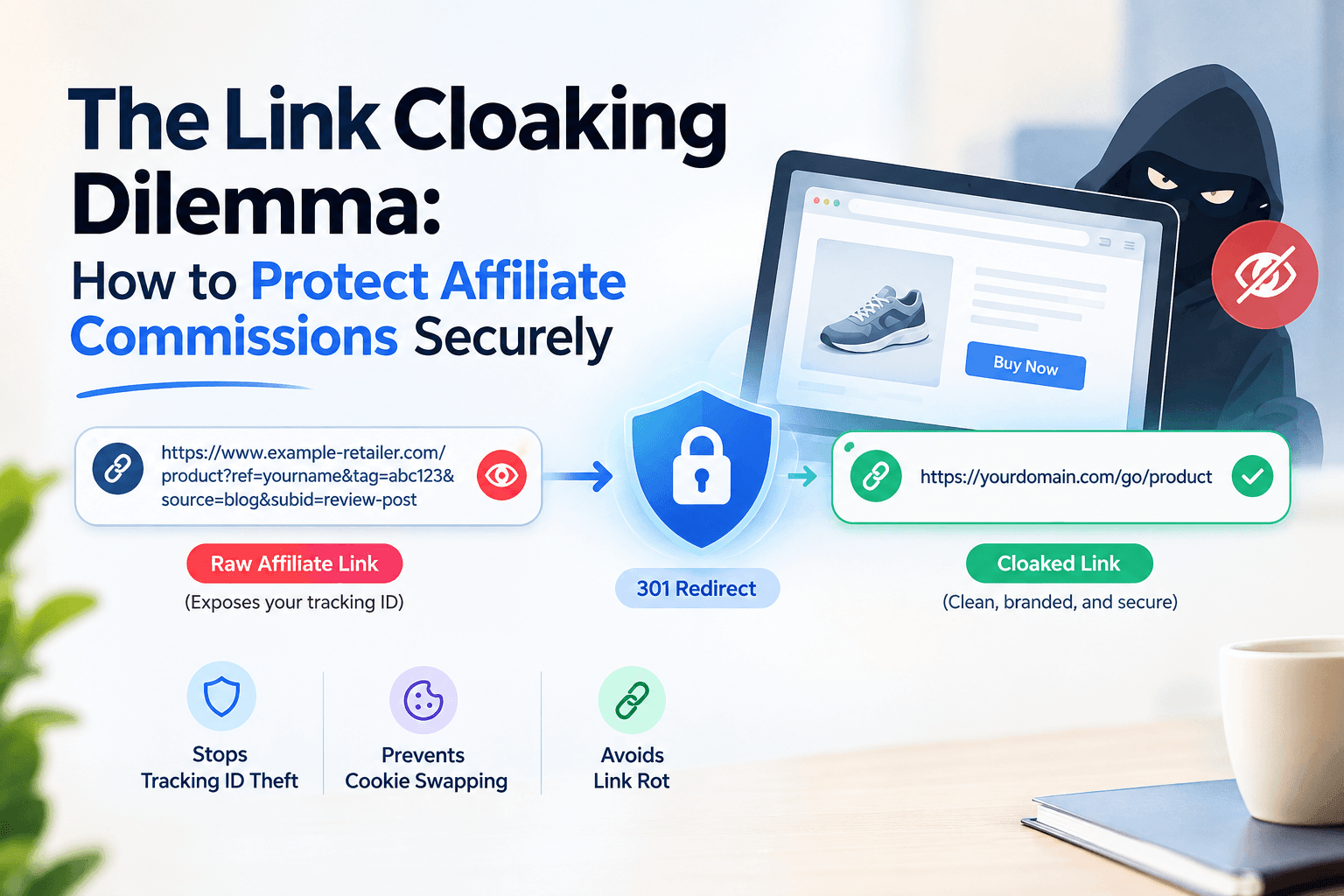
A raw affiliate link might look like this:
https://www.example-retailer.com/product?ref=yourname&tag=abc123&source=blog&subid=review-post
A cloaked version looks like this:
https://yourdomain.com/go/product-name
The redirect happens instantly. The visitor lands on the merchant page. Your tracking ID fires correctly. But nobody in the URL bar, the page source, or a hover tooltip can see your affiliate tag. That matters more than most publishers realize.
Affiliate link cloaking replaces a tracking-heavy URL with a clean redirect path. It protects your affiliate ID from being scraped, swapped, or stripped while keeping the visitor experience seamless and professional.
Why Raw Affiliate URLs Are a Security Problem
Three specific threats target unprotected affiliate links. Understanding each one helps you see why cloaking is not optional if you take your affiliate income seriously.
1. Tracking ID Theft
Your affiliate tag is visible in the URL string. A competitor, a browser extension, or a malicious script can read it, copy it, and replace it with their own tag. You send the traffic. They collect the commission. This is called affiliate ID hijacking, and it requires zero technical skill from the attacker.
2. Cookie Swapping
Cookie swapping occurs when a third-party script on a page overwrites your affiliate cookie with a different affiliate's cookie before the transaction completes. If your tracking ID is visible in the URL, that makes the job easier for any script scanning outbound link parameters. A cloaked redirect reduces the exposure window significantly.
3. Link Rot and Commission Gaps
Raw affiliate URLs are fragile. Merchants change product pages, restructure their sites, or retire affiliate programs. A cloaked link stored in one place lets you update the destination URL without editing every post on your site. The cloaked path stays consistent. The target changes behind it.
Cookie swapping is one of the most underreported forms of affiliate fraud. A visible affiliate tag in your URL gives malicious scripts a clear target. Cloaking removes that target from sight before the click ever reaches the merchant.
How 301 Redirects Protect Affiliate Tracking IDs
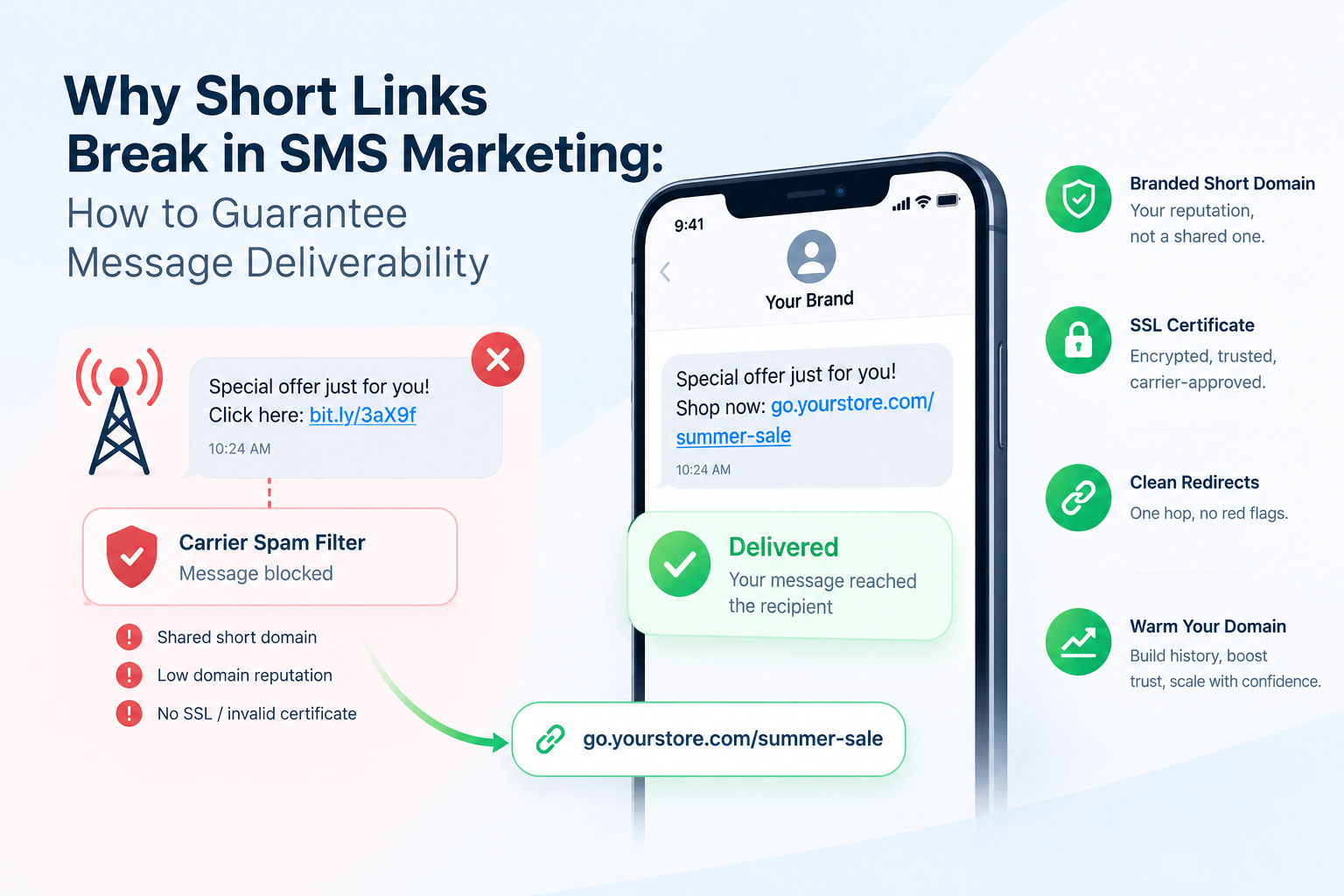
A 301 redirect is a permanent redirect instruction sent by a server. When a visitor clicks your cloaked link, the server responds with a 301 status and sends the browser to your real affiliate URL. The visitor never sees the destination URL in the address bar during the transition.
This matters for three reasons. First, your affiliate parameters travel inside the redirect header, not the visible URL. Second, search engines follow 301 redirects and do not index the intermediate cloaked URL as a duplicate page. Third, any analytics or pixel firing attached to the redirect URL happens before the visitor reaches the merchant site.
Compare this to a JavaScript-based redirect or a meta refresh. Those approaches are slower, easier to block, and do not carry the same SEO clarity. A clean server-side 301 is the standard for a reason.
To understand how branded short links work as a cloaking layer, the guide on setting up a branded short link with a custom domain explains the full setup process from domain connection to link creation.
What Does Affiliate Link Cloaking Safe Actually Mean?
Searching for "affiliate link cloaking safe" usually means one of two things: is it safe for your affiliate account, or is it safe for visitors. Both questions deserve a direct answer.
For your affiliate account: Most affiliate networks permit link cloaking as long as the final destination is disclosed and your tracking cookie fires correctly. Amazon Associates has specific policies around link modification that you should review before cloaking their links. Always check your individual network's terms.
For your visitors: Cloaking is safe and standard practice. The visitor still reaches the correct merchant page. The redirect is instantaneous. No deception occurs as long as you follow FTC disclosure requirements, which state that any material connection to a brand must be clearly disclosed. The FTC's disclosure guide for influencers and publishers covers exactly what is required.
Affiliate link cloaking is legal and widely accepted across major networks. The critical rule: the redirect must resolve to the correct merchant page, your tracking must fire, and your content must disclose the affiliate relationship to readers. Cloaking the URL does not cloak your obligation to be transparent.
The Secure Cloaking Stack: A Practical Framework
This is the framework publishers use to build a cloaked affiliate link system that is both secure and manageable. Call it The Three-Layer Cloaking Stack.
Layer 1: The Clean Redirect URL
Create a branded, readable short link that sits in front of your affiliate URL. It should live on your own domain or a trusted short link platform. The URL structure should reflect the product or category, not your affiliate parameters.
For a full breakdown of how short links drive affiliate revenue, the article on using a URL shortener for affiliate marketing covers the strategic side in detail.
Layer 2: Click Tracking and Pixel Firing
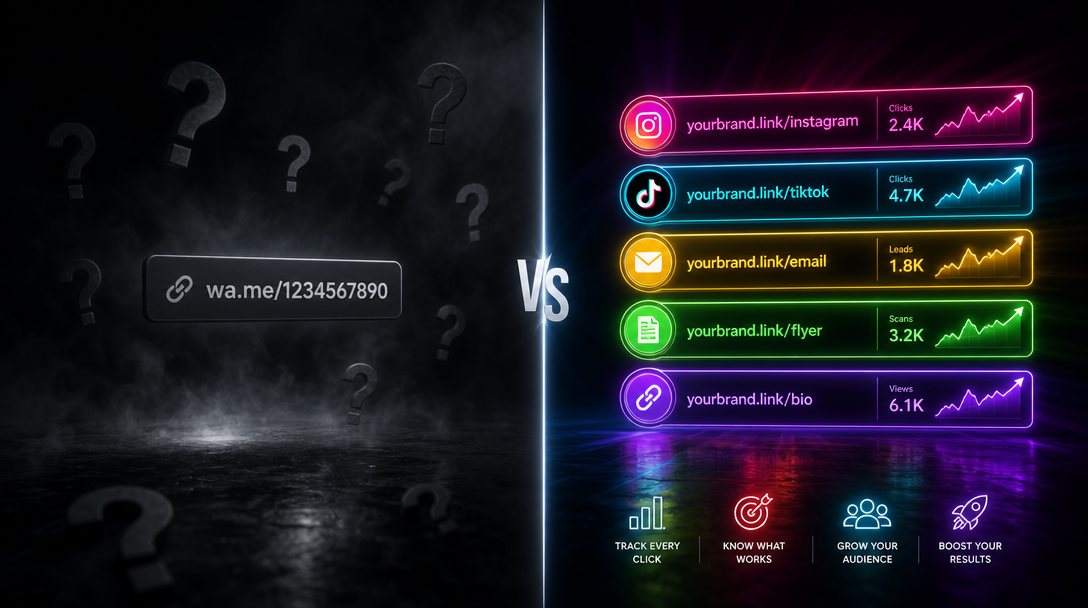
Every click on a cloaked affiliate link is a data point. You need to know which posts drive clicks, which devices convert, and which traffic sources produce buyers. Without click-level data, you are optimizing blind.
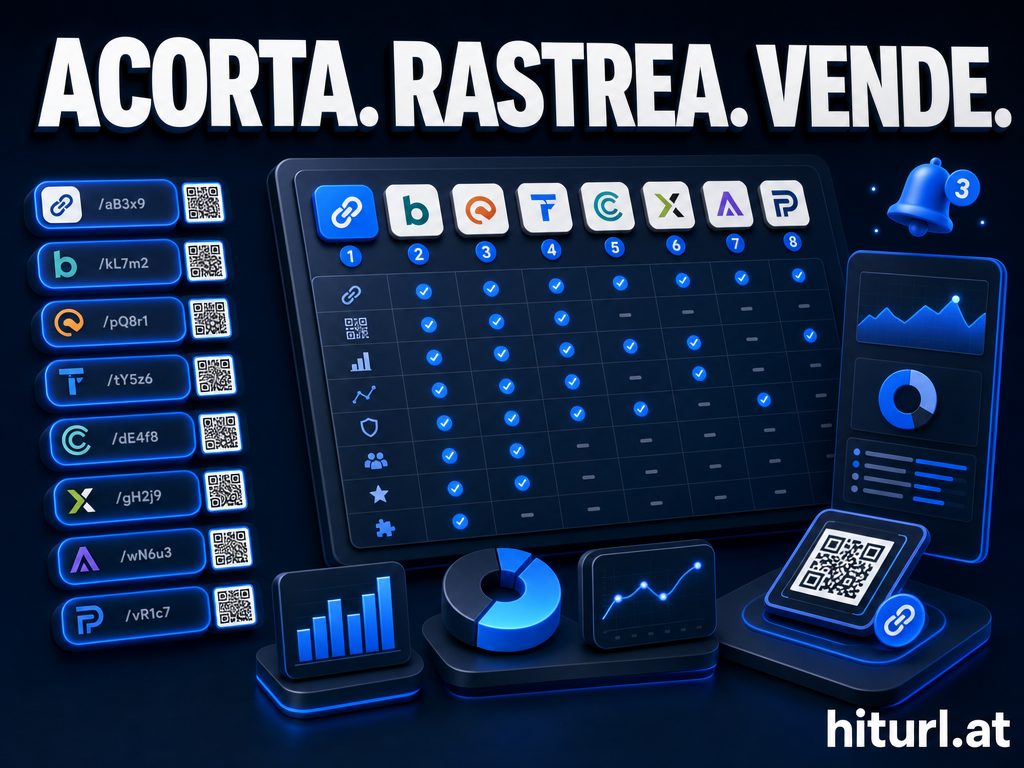
This is where a link management platform earns its place in your stack. HitURL tracks every click with geo and device data, and fires retargeting pixels on click so visitors who do not convert immediately can be reached again through paid campaigns.
See how HitURL tracks every click, fires your pixels, and generates QR codes: free at hiturl.at.
Layer 3: Centralized Link Management
All your cloaked links should live in one dashboard. When a merchant changes a product URL or you switch affiliate networks, you update one record. Every post on your site that uses that cloaked link automatically points to the new destination.
This is how professional publishers manage hundreds of affiliate links without breaking their site every time a merchant restructures their URLs.
How to Set Up a Cloaked Affiliate Link in HitURL
- Create your account at HitURL's link shortener. The free tier includes custom aliases, click tracking, and pixel support.
- Paste your raw affiliate URL into the link creation field. This is the full URL including your tracking tag and any subIDs.
- Set a custom alias that reflects the product or category. Something like hiturl.at/go/tool-name reads cleanly and professionally.
- Add your retargeting pixels. HitURL supports Facebook, Google, LinkedIn, Twitter, AdRoll, Quora, and GTM. Any visitor who clicks your affiliate link and does not convert becomes a retargetable audience immediately.
- Enable geo or device targeting if you promote products in multiple markets. Send mobile visitors to a mobile-optimized landing page. Send visitors from specific countries to region-appropriate offers.
- Save and deploy. Replace every raw affiliate link in your content with the new cloaked short link. Your tracking ID is now hidden, your pixels fire on every click, and your destination URL can be changed any time without editing your posts.
For a deeper look at how tracking and monetization work together, the guide on monetizing a blog with short links and affiliate tracking connects the full picture from click to commission.
What to Do If You Suspect Commission Theft
If your click numbers look strong but your commission reports look weak, something may be wrong upstream. Here is a practical checklist.
- Compare your link platform's click count against the merchant's reported click count. A large discrepancy points to tracking issues or cookie interference.
- Review your affiliate URL for parameter injection. Open your raw affiliate URL in a browser and check whether the parameters are arriving intact on the merchant's side.
- Audit browser extensions. Some extensions used by visitors actively strip or replace affiliate cookies. You cannot control this entirely, but you can monitor the gap between clicks and tracked visits in your merchant dashboard.
- Check your redirect type. If you are using a JavaScript redirect or meta refresh instead of a 301, switch. Server-side redirects are more reliable and harder to intercept.
- Rotate your subIDs. Assign unique subIDs to each post or campaign so you can isolate which source is experiencing the gap.
If your click data and your commission data tell different stories, start with your redirect method and your tracking parameters. A server-side 301 redirect with a reliable click tracker gives you the baseline you need to identify exactly where the gap appears.
Frequently Asked Questions
Is affiliate link cloaking allowed by Amazon Associates?
Amazon has specific policies on how their links can be modified or redirected. You should review their official operating agreement and link modification guidelines before cloaking Amazon affiliate links, as certain types of redirection may violate their terms.
Does link cloaking hurt SEO?
No. A properly implemented 301 redirect does not harm your SEO. Search engines follow 301s and do not index the intermediate cloaked URL as a separate page. Adding a rel="nofollow" attribute to your outbound affiliate links is also standard practice and has no negative impact on your own rankings.
What is the difference between link cloaking and URL shortening?
URL shortening creates a shorter alias for a URL, primarily for aesthetics and shareability. Link cloaking specifically hides affiliate tracking parameters from public view using a redirect. A good affiliate link setup does both: a branded short URL that cloaks the affiliate string and redirects through a 301.
Can visitors see through a cloaked affiliate link?
A technically aware visitor can follow the redirect chain using browser developer tools or a service like RedirectChecker. Cloaking is not about deceiving visitors. It is about protecting your tracking ID from automated scraping, malicious scripts, and casual competitor analysis. The FTC still requires you to disclose the affiliate relationship regardless of whether the URL is cloaked.
How do I protect my affiliate tracking ID from being replaced?
Use a server-side 301 redirect through a trusted link management platform, assign unique subIDs to each campaign, monitor your click-to-commission ratio regularly, and avoid sharing your raw affiliate URLs in public posts or forums. A cloaked branded link keeps your tracking ID out of sight and significantly reduces the exposure window for ID hijacking.
Start Protecting Your Affiliate Revenue Today
Every unprotected affiliate link is a small but real risk. Multiply that across hundreds of posts and thousands of monthly clicks, and the exposure adds up fast. A clean 301 redirect path, pixel-level click tracking, and centralized link management are not advanced tactics reserved for large publishers. They are baseline practices for anyone serious about affiliate income.
See how HitURL tracks every click, fires your pixels, and generates QR codes: free at hiturl.at. No credit card needed to get started.