

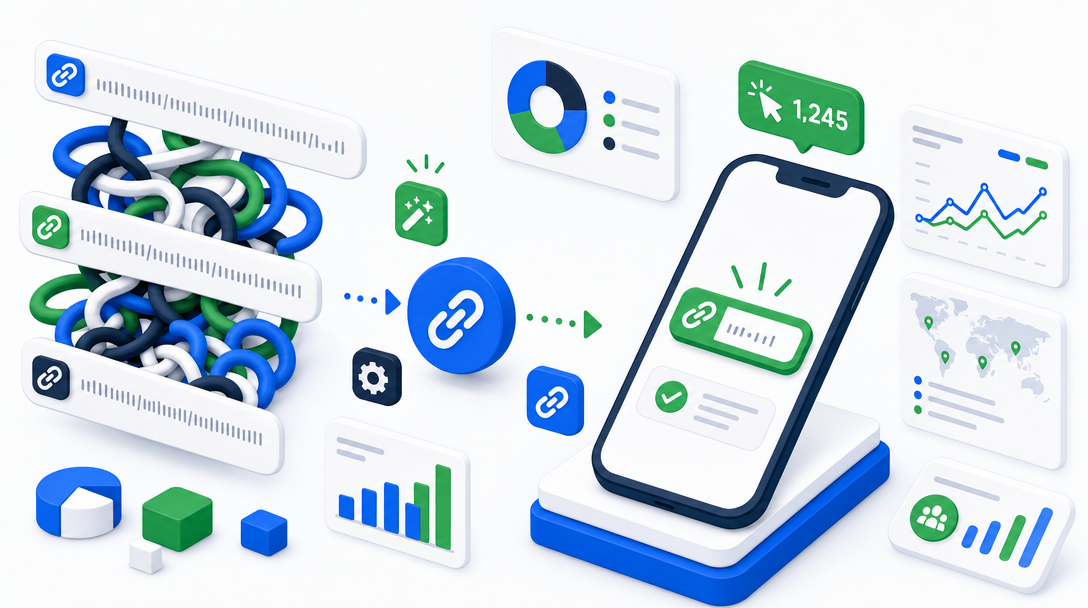
A URL shortener takes a long web address and creates a compact, clickable version that redirects to the original page. When someone clicks your short link, they land on the same destination in milliseconds through an automatic redirect.
If you've ever wondered "what is a URL shortener" or how these tools actually work behind the scenes, this guide covers everything from basic mechanics to advanced use cases.
How Does a URL Shortener Work?
URL shorteners work through HTTP redirects at the server level. When you create a short link, the shortener service stores your original URL in a database and assigns it a unique identifier.
Here's what happens when someone clicks your short link:
- Their browser requests the short URL from the shortener's server
- The server looks up the original destination in its database
- It sends back a redirect response (301 or 302) with the real URL
- The browser automatically follows the redirect to the final page
This entire process takes less than 100 milliseconds. The user sees a brief loading indicator, then lands on your target page.
URL shorteners create a bridge between your marketing materials and your web pages, allowing you to track every click while keeping links clean and professional.
301 vs 302 Redirects: What's the Difference?
Most URL shorteners use either 301 or 302 redirects, and the choice affects how search engines treat your links.
A 301 redirect signals "moved permanently" to search engines. This passes most of the original page's SEO authority to the destination URL. Static marketing campaigns often use 301 redirects.
A 302 redirect means "moved temporarily." Search engines don't transfer SEO value, making this ideal for dynamic campaigns where you might change the destination later.
Who Uses URL Shorteners and Why?
URL shorteners serve four main groups, each with specific needs around link management and tracking.
Digital Marketers
Marketers use short links to track campaign performance across channels. A single campaign might include email, social media, SMS, and print materials, each needing clean, trackable links.
Short links also preserve UTM parameters without creating unwieldy URLs. Instead of showing 200+ character tracking URLs, marketers can share clean links that still capture every data point.
Content Creators and Influencers
Creators need professional-looking links for their bio sections, video descriptions, and social posts. Platform character limits make short links essential for platforms like Twitter or Instagram stories.
Many creators also use dynamic QR codes to bridge offline and online content, updating destinations without reprinting materials.
Developers and SaaS Companies
Technical teams use URL shorteners for user onboarding flows, password resets, and feature announcements. Short links in transactional emails have higher click-through rates than full URLs.
SaaS companies also use shortened links for A/B testing different landing pages without changing the links in their marketing materials.
Enterprise Brands
Large companies use URL shorteners for brand consistency across departments. Instead of random short codes, they create branded short links that reinforce their domain authority.
Enterprise users also need advanced features like team collaboration, link expiration dates, and detailed analytics dashboards.
Why URL Shorteners Improve Click-Through Rates
Short links consistently outperform long URLs in click-through rates across every marketing channel. The psychology and practical benefits create measurable improvements.
Studies show that short links can increase click-through rates by up to 39% compared to full-length URLs, primarily due to reduced visual complexity and increased trust.
Visual Appeal and Trust
Long URLs look suspicious, especially when they contain tracking parameters or session IDs. Users hesitate to click links that appear complex or potentially malicious.
Short links look cleaner and more professional. A link like "hiturl.at/guide" appears more trustworthy than a 150-character URL with multiple parameters.
Platform Optimization
Different platforms have different character limits and display behaviors. Short links adapt to these constraints:
- Twitter: Character limits make every space valuable
- SMS: Long URLs can trigger multiple message charges
- Email: Some clients break long URLs across lines
- Print: QR codes work better with shorter destination URLs
The best practices for social media URLs emphasize consistency and brand recognition across platforms.
Static vs Dynamic Links: Understanding the Difference
URL shorteners create two types of links, each serving different marketing needs and campaign strategies.
Static Short Links
Static links point to the same destination permanently. Once created, the redirect doesn't change. These work well for:
- Evergreen content and resources
- Printed materials like business cards
- Permanent redirects from old domains
- Reference links in documentation
Static links often use 301 redirects to pass SEO authority to the destination page.
Dynamic Short Links
Dynamic links let you change the destination after creation. The short URL stays the same, but you can update where it leads. This flexibility enables:
- Seasonal campaign updates
- A/B testing different landing pages
- Event promotions with changing details
- Product launches with evolving messaging
Dynamic short links give marketers the power to adapt campaigns in real-time without updating links across every marketing channel.
You can learn more about creating custom aliases for your short links to maintain brand consistency.
The Clean Link Method: A Framework for Better URLs
The Clean Link Method is a systematic approach to creating and managing short links that maximize both user experience and tracking capabilities.
Step 1: Define Your Naming Convention
Create consistent patterns for your short link aliases. Use descriptive terms that team members can understand months later:
- Campaign-based: summer2026-sfale, holiday-promo
- Content-based: pricing-guide, demo-video
- Channel-based: email-signup, social-bio
Step 2: Preserve Your UTM Parameters
Attach UTM tracking codes to your destination URLs before shortening. The short link will preserve all parameters while keeping the displayed URL clean.
Step 3: Test Across Devices
Verify that your short links work correctly on mobile devices, different browsers, and email clients. Some platforms handle redirects differently.
Step 4: Monitor and Optimize
Track click-through rates, geographic data, and device types. Use this data to optimize future campaigns and link placement strategies.
For teams managing multiple campaigns, HitURL offers organized dashboards where you can track performance across all your shortened links. You can see which campaigns drive the most clicks and adjust your strategy accordingly.
The most effective marketers treat short links as strategic assets, not just convenience tools, using consistent naming and comprehensive tracking.
Use Cases Across Marketing Channels
Different marketing channels benefit from URL shorteners in unique ways. Understanding these use cases helps you implement short links strategically.
Social Media Marketing
Social platforms prioritize clean, shareable content. Short links improve post aesthetics while providing detailed click tracking:
- Instagram Stories: Swipe-up links need to be memorable
- LinkedIn Posts: Professional appearance matters
- Twitter: Character limits require efficiency
- TikTok: Bio links need frequent updates
Email Marketing
Email clients sometimes break long URLs across multiple lines, creating broken links. Short URLs prevent this issue while tracking email-specific metrics like:
- Open rates vs click rates correlation
- Time between open and click
- Device-specific engagement patterns
SMS and Text Marketing
Text messages have strict character limits, and long URLs can trigger additional message fees. Short links keep messages concise while enabling click tracking in SMS campaigns.
Print and Offline Materials
Business cards, brochures, and advertisements benefit from memorable short URLs. QR codes also work better with shorter destination addresses, creating cleaner, more scannable codes.
Advanced Features in Modern URL Shorteners
Today's URL shorteners offer sophisticated features beyond basic link shortening, enabling advanced marketing strategies and detailed analytics.
Retargeting Pixel Integration
Modern shorteners can fire retargeting pixels when users click your links. This means every click becomes a retargeting opportunity across Facebook, Google, LinkedIn, and other platforms.
Geo and Device Targeting
Advanced tools redirect users to different pages based on their location or device type. A single short link can send mobile users to your app store and desktop users to your website.
Link Expiration and Security
Set expiration dates for time-sensitive campaigns or password-protect links for exclusive content. Some shorteners also scan destinations for malware before redirecting users.
Advanced URL shorteners function as comprehensive link management platforms, offering targeting, analytics, and security features that transform simple redirects into powerful marketing tools.
When comparing different options, consider reading about the best URL shorteners available in 2026 to understand which features matter most for your use case.
Understanding DNS-Level Redirects
URL shorteners work at the DNS and HTTP protocol level, creating seamless redirects that preserve user experience while enabling comprehensive tracking.
The Technical Process
When you click a short link, your browser initiates a DNS lookup to find the shortener's server IP address. The server then processes your request and responds with redirect instructions.
This process involves several components:
- DNS Resolution: Converting the domain name to an IP address
- HTTP Request: Your browser asking for the resource
- Database Lookup: The server finding your destination URL
- Redirect Response: Sending you to the final destination
Performance Considerations
Quality URL shorteners use global content delivery networks (CDNs) to minimize redirect delays. The best services add less than 50 milliseconds to your click-to-load time.
Server location and infrastructure quality directly affect user experience. Choose shorteners with reliable uptime and fast response times.
Measuring Success with URL Shortener Analytics
URL shortener analytics provide insights beyond basic click counting, helping you optimize campaigns and understand audience behavior patterns.
Essential Metrics to Track
Focus on metrics that directly impact your marketing goals:
- Click-through rate: Percentage of people who see and click your link
- Geographic distribution: Where your audience is located
- Device breakdown: Mobile vs desktop engagement
- Referrer sources: Which platforms drive the most traffic
- Time-based patterns: When your audience is most active
The latest URL shortener statistics show how different industries use these metrics to improve campaign performance.
Connecting Analytics to Business Goals
Raw click data becomes valuable when connected to conversion tracking. Use UTM parameters to trace clicks through your entire marketing funnel, from initial click to final purchase.
Start shortening links for free at hiturl.at. No credit card needed.
Frequently Asked Questions
Are URL shorteners safe to use?
Reputable URL shorteners are safe and use HTTPS encryption. However, always verify the shortener's reputation before clicking unknown links, as malicious actors sometimes use shorteners to hide dangerous destinations.
Do short links hurt SEO?
Short links using 301 redirects pass most SEO authority to the destination page. However, using too many redirects can slow page load times. For SEO-critical pages, consider using direct links when possible.
Can I customize my short link URLs?
Most URL shorteners allow custom aliases instead of random characters. This creates more memorable and brandable links like "yourdomain.com/sale" instead of "yourdomain.com/x7k9m2."
How long do short links last?
Short links typically last indefinitely unless you set an expiration date or the shortener service shuts down. Choose established providers with strong uptime records for important long-term links.
What's the difference between free and paid URL shorteners?
Free shorteners usually offer basic link shortening with limited analytics. Paid versions include advanced features like custom domains, detailed analytics, retargeting pixels, team collaboration, and API access for bulk operations.